Heavy equipment welding in Belleville
Heavy equipment welding is usually about reducing downtime. The request needs to show the damaged part, job site access, and whether the equipment can be safely positioned for welding.
Call for the fastest answer. Mon-Sat, 7am-7pm for normal callback hours.
Get a clearer answer on the first call.
A good request helps confirm whether mobile welding is practical, what safety details matter, and what photos or measurements will speed up the callback.
- One wide photo, one close-up, and one access photo.
- Steel, stainless, aluminum, cast, or unknown material.
- Belleville-area location, urgency, and whether the item can move.
Equipment repairs start with downtime and access.
Typical equipment repairs
Requests can include bucket cracks, brackets, wear areas, loader or excavator components, broken attachments, and damaged shop equipment. Heavy equipment work often needs more preparation and safety control than small fabrication repairs.
Downtime questions
Say whether the equipment is blocking work, whether it can move, whether power or shelter is available, and whether the repair can wait for business hours. These details help determine whether a mobile visit is realistic.
What a welder may ask
A welder may ask for metal thickness, machine make, part location, access around the damaged area, whether hydraulic lines or combustible material are nearby, and whether the repair requires gouging, grinding, or replacement parts.
Buckets, attachments, brackets, and cracked parts need repair context.
For equipment owners, the main benefit is reducing downtime without moving a machine unnecessarily. The first call should make it clear what machine is affected, what work is stopped, and whether the weld area is close to pins, hydraulics, wiring, guards, fuel, or load points.
Common examples
- Excavator and loader bucket repairs
- Attachment brackets, wear areas, cracks, and mounts
- Access around the machine and ground conditions
- Downtime-sensitive repair planning
Reduce downtime by explaining the machine and the damaged part.
For buckets, brackets, wear plates, loader arms, excavator attachments, and cracked equipment parts, the useful details are the machine, the damaged area, and whether it can be positioned safely.
Your photos should also show nearby hydraulic lines, fuel, wiring, guards, grease, or combustible material. These details affect whether mobile welding is practical or whether the part needs removal or shop repair.
Helpful details
- Machine or attachment type
- Part location and access
- Downtime urgency
- Hydraulic, fuel, or electrical hazards nearby
Good equipment details reduce downtime and wrong assumptions.
Heavy equipment repairs need more than a close-up of a crack. The full machine, attachment, worksite, and nearby hazards help determine whether mobile welding is practical and what questions need to be answered first.
If the part is structural, used on the road, connected to equipment, or close to fuel, wiring, hydraulics, or combustible material, say that early. Those details help a welder decide what questions to ask, what preparation may be needed, and whether the item should stop being used until it is reviewed.
Best equipment repair message
- Machine and attachment type.
- What job is stopped and how urgent it is.
- Photos of the full machine, damaged area, and nearby hydraulics or wiring.
- Whether the machine is parked safely with room to work.
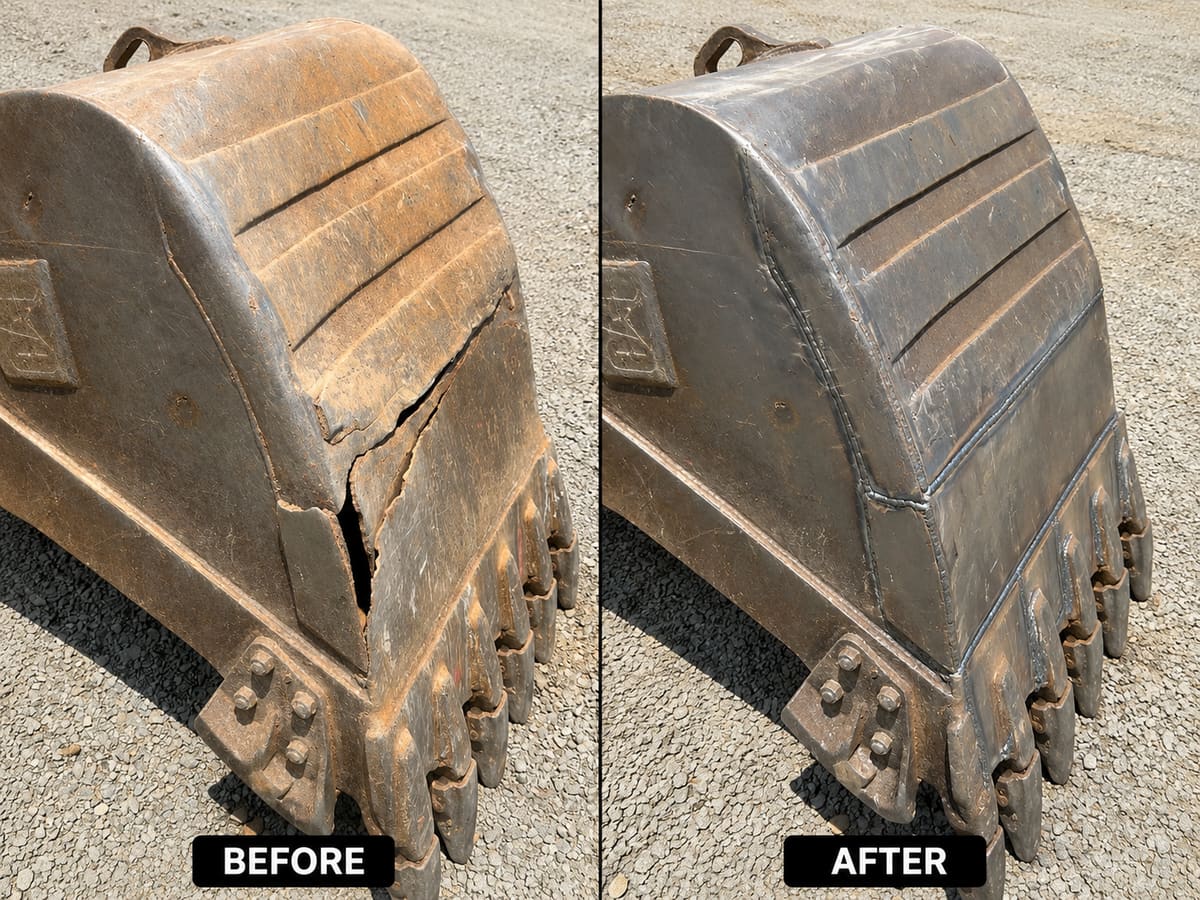
Equipment work needs access and downtime context.
If a bucket, attachment, bracket, or cracked part is stopping work, show the full machine, the damaged area, and anything nearby that affects safety: hydraulic lines, wiring, fuel, guards, or combustible material.
What customers say about similar mobile welding work.
These collected reviews are shown without pretending there is a star score or total review count. They help customers understand communication, job fit, and on-site repair context.
We had a worn crack starting on an excavator bucket at a jobsite in Belleville. Moving the machine would have wasted half a day, so the mobile service made a big difference. Bel...
We had an urgent repair needed on a piece of equipment near Napanee and couldn't wait several days for a shop appointment. Belleville Mobile Welding responded quickly, asked the...
Good experience with Belleville Mobile Welding for an on-site steel repair in Prince Edward County. I sent photos of the damage, they confirmed the job looked suitable for mobil...
Use close-up photos to show exactly what failed.
For heavy equipment, pair a full-machine photo with close-ups of the cracked part, weld area, pins, brackets, and nearby hazards. That gives the welder enough context to ask better questions.
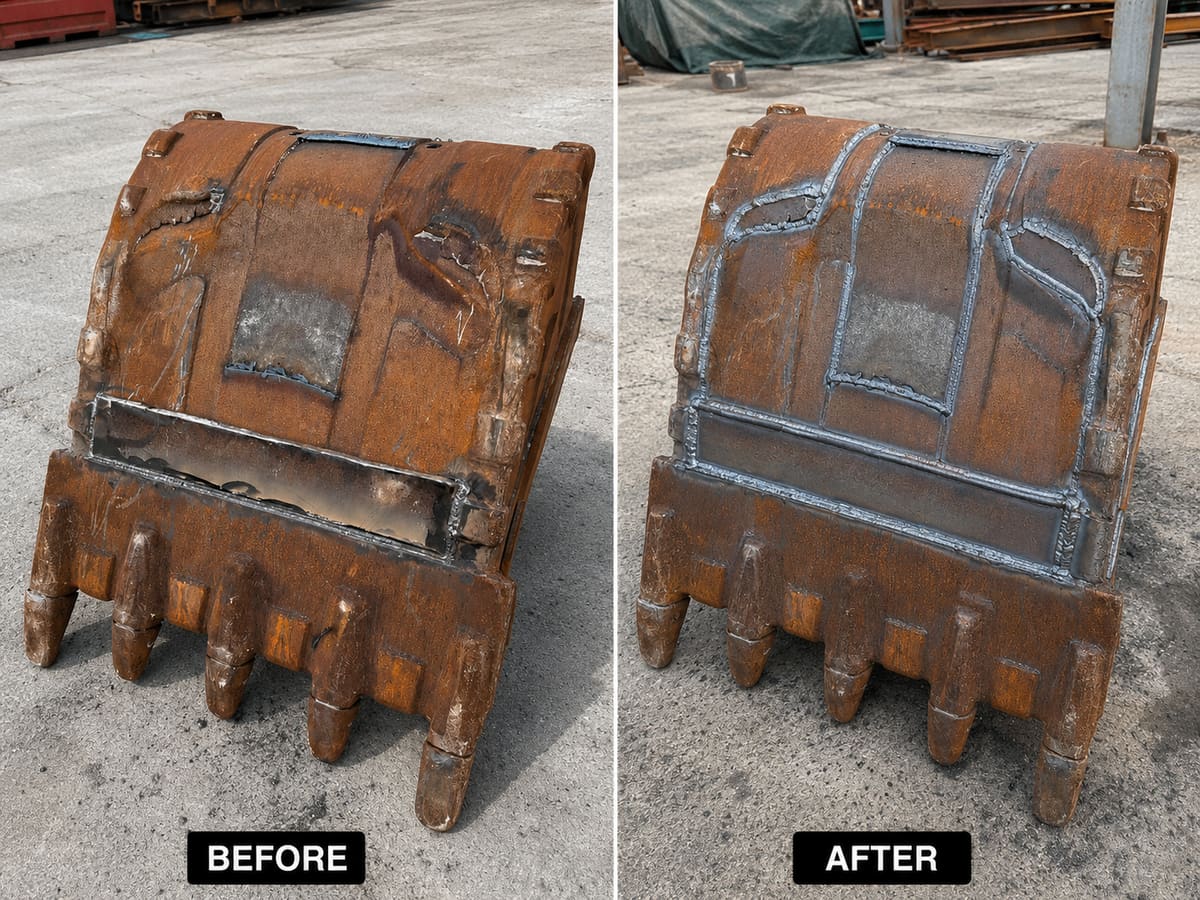
Quick answers before you call.
These answers are specific to this type of Belleville mobile welding request.
Can heavy equipment welding be done without moving the machine?
It may be possible when the machine is parked safely with enough access, but bucket, attachment, bracket, crack, and wear-plate repairs depend on the damaged area and nearby hazards.
What details matter for equipment downtime?
Include the machine type, attachment, what work is stopped, photos of the damage, nearby hydraulics or wiring, ground conditions, and whether the area is safe for setup.
Can a cracked bucket be welded in the field?
Some bucket repairs can be reviewed for mobile welding, but cracks near pins, load points, cutting edges, or structural areas may need more preparation or shop-level work.
Call before downtime gets more expensive.
If the repair affects a trailer, machine, bucket, gate, railing, or bracket, call first and describe the basics. Clear photos can come after the call if the damaged part is hard to explain.
Have this ready for the call
- Your location and best callback number.
- What broke and what the item is used for.
- Photos of the full item, close-up damage, and work area.
- Whether the item is safe to move or still in use.
Related Belleville welding pages.
Use the closest page for the job type. The more specific page gives you better guidance on photos, measurements, access notes, and safety details.