Excavator bucket welding repair: cracks, teeth, and wear plates fixed on-site
An excavator bucket takes more abuse than almost any other part of the machine. It digs through rock, scrapes against concrete, and carries heavy loads, so it cracks, the teeth wear down, and the wear plates thin out. When that happens the bucket usually doesn't need replacing — it needs welding. Mobile repair brings that work to wherever the machine sits.
Call for the fastest answer. Mon-Sat, 7am-7pm for normal callback hours.
Get a clearer answer on the first call.
A good request helps confirm whether mobile welding is practical, what safety details matter, and what photos or measurements will speed up the callback.
- One wide photo, one close-up, and one access photo.
- Steel, stainless, aluminum, cast, or unknown material.
- Belleville-area location, urgency, and whether the item can move.
What customers should know before they call.
Why buckets crack and wear out
A bucket fails in predictable places because stress concentrates there. Cracks usually appear along the corners, the bottom seam, or where the bucket meets the connection points, and they grow with every load. Teeth take the direct impact of digging and wear down or snap off. Wear plates along the bottom and sides thin out, and once they wear through, the shell itself starts taking damage. The cutting edge rounds off and loses its bite. A crack that keeps reopening in the same spot often points to a load or stress issue, not just a tired weld.
What can be welded on a bucket
Most bucket damage is a welding repair rather than a replacement job. Cracks get prepared and welded so the bucket regains its strength; catching one early keeps it from spreading into the shell. Worn or broken teeth and their adapters can be addressed so the bucket digs properly again. Worn wear plates can be cut out and new plate welded in to protect the shell, which is far cheaper than letting the shell wear through. The cutting edge can be rebuilt or replaced, and a spot that keeps failing can sometimes be reinforced so it holds up longer.
How on-site bucket repair works
Tell the welder what's wrong — cracked, worn teeth, thinned plates — along with the machine and where it is. Photos help a lot and let the right gear and material come on the first trip. Some bucket repairs are straightforward on-site work; others depend on access and the extent of the damage, and heavier repairs are sometimes better done in a shop. The welder comes to the machine, prepares the metal properly, and makes the repair in place so you see the finished work on your own bucket before it goes back to work.
When it's worth repairing instead of replacing.
A new bucket is a major cost. Most cracks, worn teeth, and thinned wear plates are repairs, not write-offs, and catching them early is the difference between a small weld and a replacement. A crack left to grow can reach the shell; worn plates left too long let the shell itself wear out.
Because a bucket is heavy and awkward to transport and an excavator that's down isn't earning, mobile welding brings the repair to the job site or yard. On-site excavator bucket repair is available across Belleville and the surrounding Quinte region, including Quinte West, Trenton, Napanee, Brighton, Prince Edward County, and Tyendinaga.
Helpful details
- What's wrong: cracks, worn teeth, or thinned plates
- The machine and where it is located
- Access and position of the bucket
- Photos of the crack, worn edge, or damaged plates
Clear details help you avoid a wasted trip or wrong repair plan.
You are trying to avoid a missed call, a wrong assumption, or a repair that needs a different process than expected. Clear photos, measurements, access notes, and safety context help the first response focus on whether mobile welding makes sense for your specific job.
If the part is structural, used on the road, connected to equipment, or close to fuel, wiring, hydraulics, or combustible material, say that early. Those details help a welder decide what questions to ask, what preparation may be needed, and whether the item should stop being used until it is reviewed.
Best first message
- What broke and what the item is used for.
- Where the item sits and how a work vehicle can access it.
- Material, size, and thickness if you know them.
- Whether the repair is urgent, structural, or safety-sensitive.
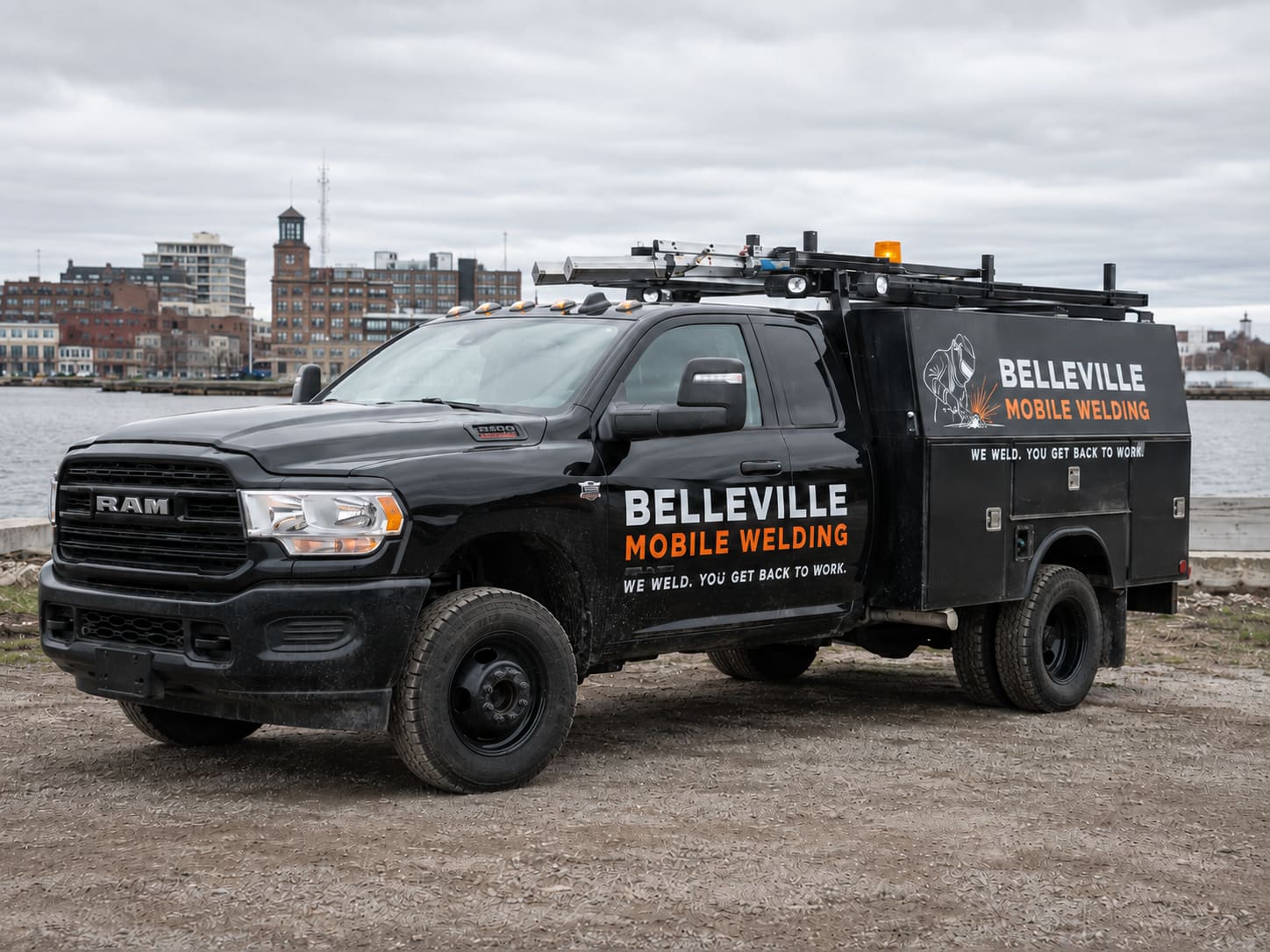
Photos turn a vague request into a clear repair conversation.
Show the full item, the damaged area, and the space around the worksite so the repair can be reviewed with fewer follow-up questions.
Call before you move or keep using the damaged item.
If the repair affects a trailer, machine, bucket, gate, railing, or bracket, call first and describe the basics. Clear photos can come after the call if the damaged part is hard to explain.
Have this ready for the call
- Your location and best callback number.
- What broke and what the item is used for.
- Photos of the full item, close-up damage, and work area.
- Whether the item is safe to move or still in use.
Related Belleville welding pages.
Use the closest page for the job type. The more specific page gives you better guidance on photos, measurements, access notes, and safety details.