Excavator bucket welding in Belleville
Excavator bucket welding in Belleville is usually about reducing downtime: cracks, worn teeth, cutting edges, side wear, and worn plates should be reviewed before the bucket keeps working and the damage spreads.
Call for the fastest answer. Mon-Sat, 7am-7pm for normal callback hours.
Get a clearer answer on the first call.
A good request helps confirm whether mobile welding is practical, what safety details matter, and what photos or measurements will speed up the callback.
- One wide photo, one close-up, and one access photo.
- Steel, stainless, aluminum, cast, or unknown material.
- Belleville-area location, urgency, and whether the item can move.
Bucket welding starts with downtime, access, and damage photos.
What bucket damage usually means
Cracks around corners, seams, ears, side plates, and high-stress areas can grow under load. Teeth, adapters, wear plates, and cutting edges also wear down from digging, scraping, and loading. A few clear photos help decide whether on-site repair is realistic.
What to send before a callback
Send the machine type, bucket size if known, photos of the full bucket, close-ups of cracks or worn areas, ground conditions, whether the machine can be parked safely, and whether hydraulic lines, pins, teeth, or guards are close to the weld area.
Belleville jobsite access
Bucket repairs may happen in a yard, shop lot, farm lane, construction site, or equipment storage area. Access, stable ground, weather, lighting, nearby fuel, and room to work all affect whether mobile welding is a fit.
Bucket repair is easier to assess with machine and access context.
A bucket close-up shows the crack, but the full-machine photo shows whether the area can be reached safely.
Downtime-sensitive equipment repair is more practical when the welder knows what part is damaged, what work is stopped, and whether the site is safe for setup.
Helpful details
- Machine and bucket type
- Full bucket and close-up photos
- Pins, teeth, cutting edge, or wear plate location
- Ground and truck-access conditions
Clear details help you avoid a wasted trip or wrong repair plan.
You are trying to avoid a missed call, a wrong assumption, or a repair that needs a different process than expected. Clear photos, measurements, access notes, and safety context help the first response focus on whether mobile welding makes sense for your specific job.
If the part is structural, used on the road, connected to equipment, or close to fuel, wiring, hydraulics, or combustible material, say that early. Those details help a welder decide what questions to ask, what preparation may be needed, and whether the item should stop being used until it is reviewed.
Best first message
- What broke and what the item is used for.
- Where the item sits and how a work vehicle can access it.
- Material, size, and thickness if you know them.
- Whether the repair is urgent, structural, or safety-sensitive.
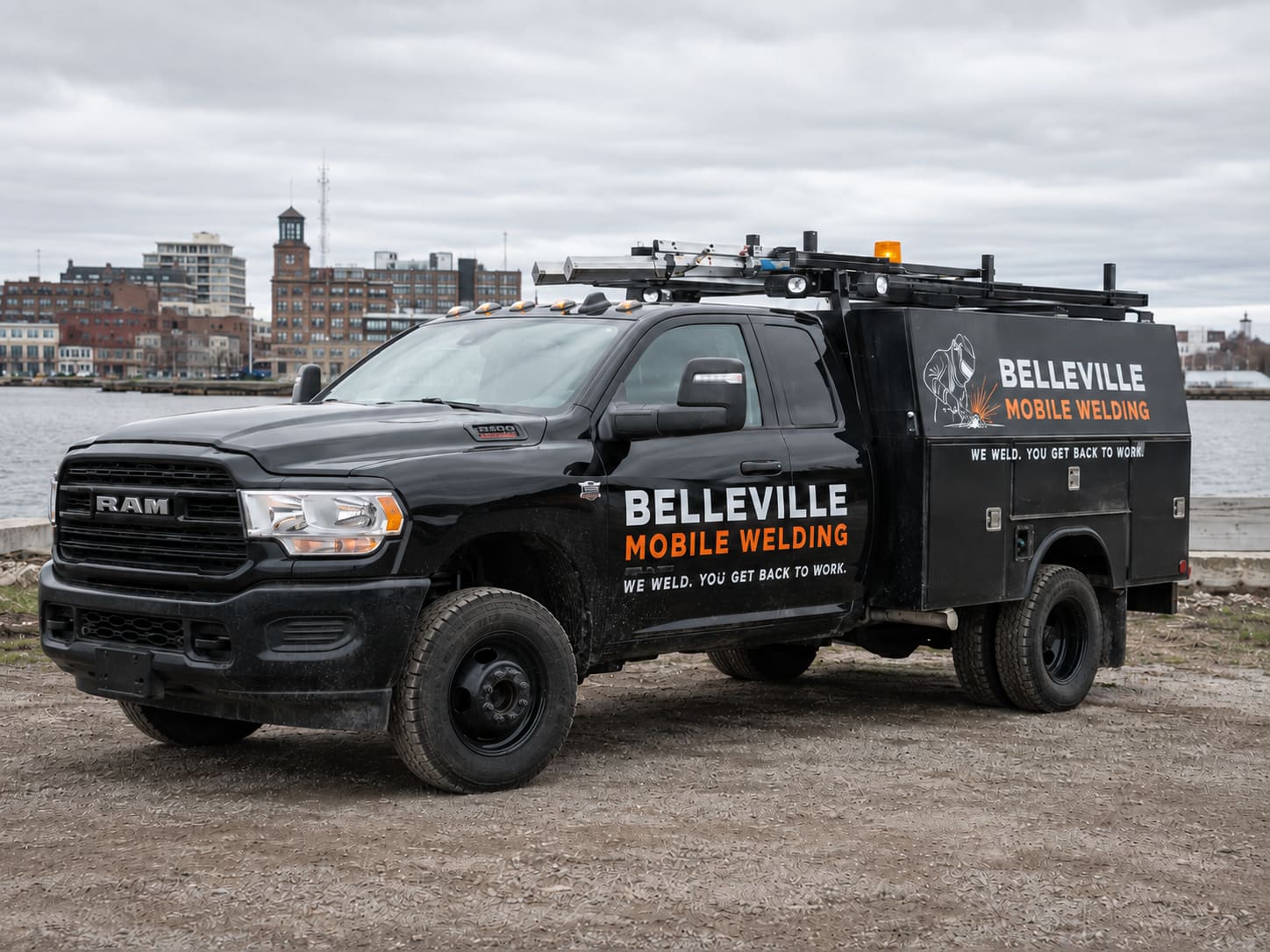
Photos turn a vague request into a clear repair conversation.
Show the full item, the damaged area, and the space around the worksite so the repair can be reviewed with fewer follow-up questions.
Quick answers before you call.
These answers are specific to this type of Belleville mobile welding request.
Can an excavator bucket be welded on site?
Some bucket cracks, teeth, adapters, cutting edges, and wear-plate repairs can be reviewed on site when the machine can be parked safely with enough access.
What bucket photos should I send?
Send the full bucket, close-ups of cracks or worn areas, teeth, cutting edge, wear plates, pins or ears if relevant, and a photo showing ground and access conditions.
When is bucket repair not a simple mobile job?
Damage near pins, ears, load points, hydraulics, badly worn base metal, or areas needing heavy fit-up may require more inspection or shop-level work.
Call before you move or keep using the damaged item.
If the repair affects a trailer, machine, bucket, gate, railing, or bracket, call first and describe the basics. Clear photos can come after the call if the damaged part is hard to explain.
Have this ready for the call
- Your location and best callback number.
- What broke and what the item is used for.
- Photos of the full item, close-up damage, and work area.
- Whether the item is safe to move or still in use.
Related Belleville welding pages.
Use the closest page for the job type. The more specific page gives you better guidance on photos, measurements, access notes, and safety details.