Mobile welding in Trenton
Mobile welding in Trenton is usually worth reviewing when the damaged trailer, gate, bracket, equipment part, or farm implement is harder to move than assess on site.
Call for the fastest answer. Mon-Sat, 7am-7pm for normal callback hours.
Get a clearer answer on the first call.
A good request helps confirm whether mobile welding is practical, what safety details matter, and what photos or measurements will speed up the callback.
- One wide photo, one close-up, and one access photo.
- Steel, stainless, aluminum, cast, or unknown material.
- Belleville-area location, urgency, and whether the item can move.
Trenton requests need location, access, and repair context.
Trenton jobs can look different by location
A request near the Trent River, Bay of Quinte, Trent Port Marina, Highway 2, or the 401 corridor can involve different access, weather exposure, road salt, paint, galvanized steel, or commercial-yard constraints.
Explain the worksite before the weld
Send the nearest Trenton or Quinte West location, whether the item is in a driveway, farmyard, marina-adjacent area, shop yard, or roadside setting, and whether a welding truck can park close enough to work safely.
Match the request to the repair type
Trailer frames, gates, railing posts, equipment brackets, bucket cracks, utility trailers, and rural implements each need different photos and safety notes. The repair plan depends on the metal, load, access, and what the part must do after repair.
Trenton requests need location, access, and repair context.
The fastest review usually comes from explaining the item, the damage, and the work area in the first message.
Photos should show the full item, close-ups of the break, and enough surrounding area to judge truck access, hazards, weather exposure, and safe setup.
Helpful details
- Nearest Trenton or Quinte West area
- Full item and damage photos
- Driveway, yard, farm, shop, or roadside access
- Whether the item is safe to move
Clear details help you avoid a wasted trip or wrong repair plan.
You are trying to avoid a missed call, a wrong assumption, or a repair that needs a different process than expected. Clear photos, measurements, access notes, and safety context help the first response focus on whether mobile welding makes sense for your specific job.
If the part is structural, used on the road, connected to equipment, or close to fuel, wiring, hydraulics, or combustible material, say that early. Those details help a welder decide what questions to ask, what preparation may be needed, and whether the item should stop being used until it is reviewed.
Best first message
- What broke and what the item is used for.
- Where the item sits and how a work vehicle can access it.
- Material, size, and thickness if you know them.
- Whether the repair is urgent, structural, or safety-sensitive.
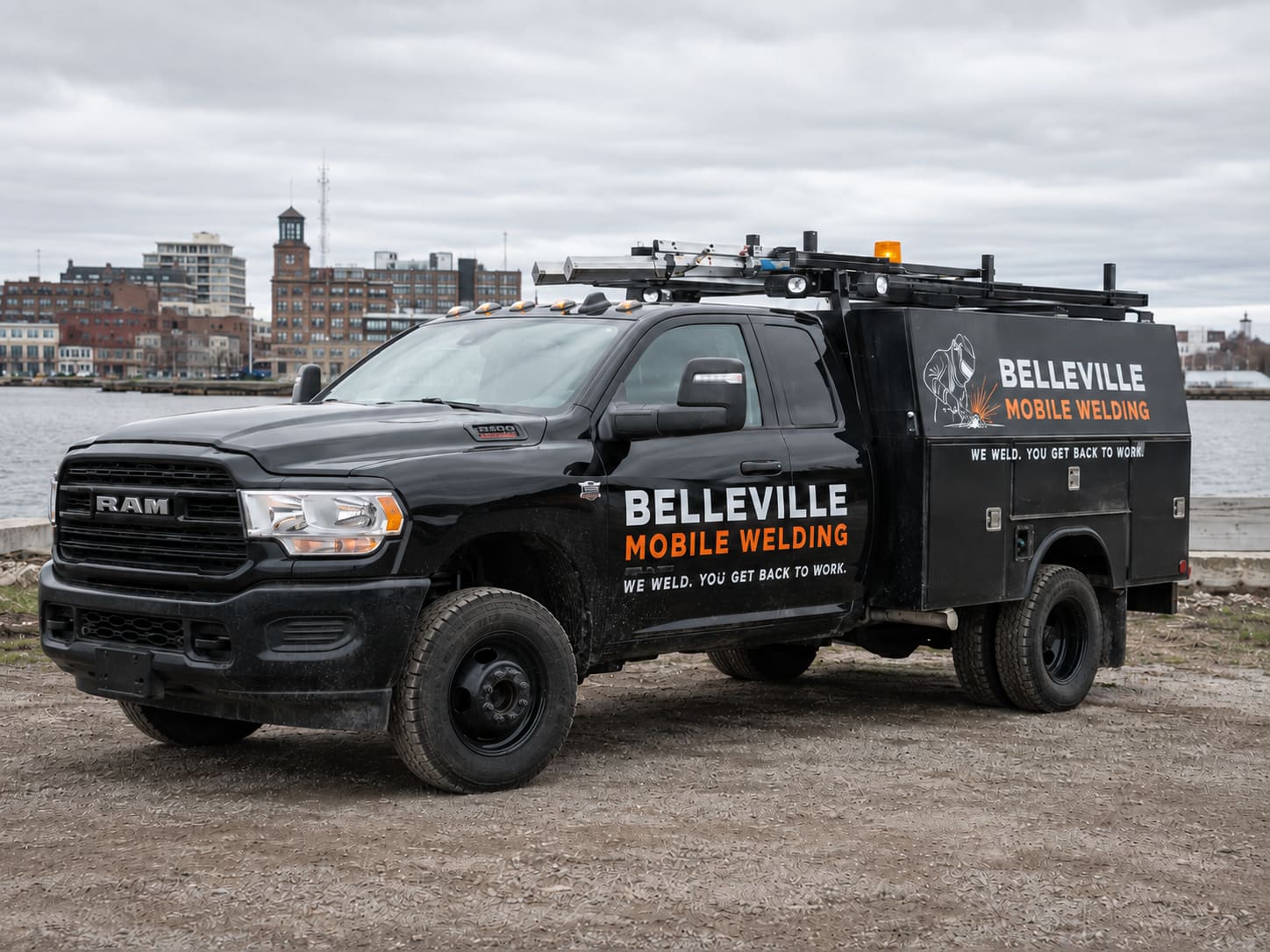
Photos turn a vague request into a clear repair conversation.
Show the full item, the damaged area, and the space around the worksite so the repair can be reviewed with fewer follow-up questions.
Quick answers before you call.
These answers are specific to this type of Belleville mobile welding request.
What should I send for a Trenton mobile welding request?
Send the Trenton or Quinte West location, photos of the full item and damaged area, worksite access, material if known, and whether the item is safe to move.
Can mobile welding help near the 401 or waterfront areas?
It may be possible when the work area is safe and accessible, but jobs near traffic, water, commercial yards, rust, salt, or weather exposure need clear access and safety details.
Is every Trenton job automatically covered?
No. Nearby Quinte requests are reviewed by distance, access, urgency, job value, material, and safety before dispatch.
Call before you move or keep using the damaged item.
If the repair affects a trailer, machine, bucket, gate, railing, or bracket, call first and describe the basics. Clear photos can come after the call if the damaged part is hard to explain.
Have this ready for the call
- Your location and best callback number.
- What broke and what the item is used for.
- Photos of the full item, close-up damage, and work area.
- Whether the item is safe to move or still in use.
Related Belleville welding pages.
Use the closest page for the job type. The more specific page gives you better guidance on photos, measurements, access notes, and safety details.